


As reducing and disclosing the environmental impact of entire supply chains in business activities gains attention, one challenge for companies aiming for reduction and disclosure is to determine which “indicators” to adopt and how to calculate them for better environmental impact assessment. Therefore, MOEJ is currently leading a project to develop and utilize a Nature Footprint assessment methodology. The Nature Footprint is a methodology that quantitatively assesses the impacts of business activities on biodiversity and ecosystem services from a life-cycle perspective. This seminar will introduce the overview of the Nature Footprint and its application cases by Japanese companies, followed by a discussion on future prospects.
Tue 18 Nov. 2025
Brazil time
10:00-11:15
Japan time
22:00-23:15
Nature Footprint -Development and Application for Nature-related Life Cycle Assessment-
Organizer : Ministry of Environment, Japan (MOEJ)
Co-organizer : Waseda University
Abstract
Program
Opening Remarks
NAMEKI Mimi|MOEJ
Initiatives to Promote Nature-Related Disclosure in Japan
OSAWA Koichi|MOEJ
Characteristics and Outlook for Biodiversity Impact Assessment in Life Cycle Assessment
JOLLIET Olivier |Technical University of Denmark
Development Research and Application of Nature Footprint
ITSUBO Norihiro| Waseda University
Case Studies of Nature Footprint Application by Shiseido
OHASHI Kenji|Senior specialist, Shiseido Company, Limited
Nature-related assessment of investment and lending portfolios using the Nature Footprint at the Norinchukin Bank
HIDA Norio|Counsellor on Global Strategy to President and the Board of Directors, The Norinchukin Bank
Session Summary
Professor ITSUBO Norihiro of Waseda University recently delivered a lecture on Life Cycle Assessment (LCA), proposing the ""Nature Footprint (NF)"" as a method to quantify business impacts on ecosystems. While Carbon Footprints have become the global standard to measure GHG emissions, addressing biodiversity loss has emerged as an equally urgent priority alongside climate change mitigation.
This seminar highlighted environmental disclosure initiatives by MOEJ and included a discussion on LCA methodologies with Professor Olivier Jolliet. Following reports from the Cabinet Office’s BRIDGE Project, led by Professor ITSUBO, a key highlight was the introduction of a new indicator based on "LIME3." This Japanese-developed method is unique in its ability to convert environmental impacts into monetary values.
Shiseido presented its business application of NF, and the Norinchukin Bank shared its nature-related portfolio evaluation; these examples attracted significant international attention. Building on the presentation at COP30, the ongoing objective is to promote the global standardization of this Japanese technology and achieve a "Nature Positive" society.
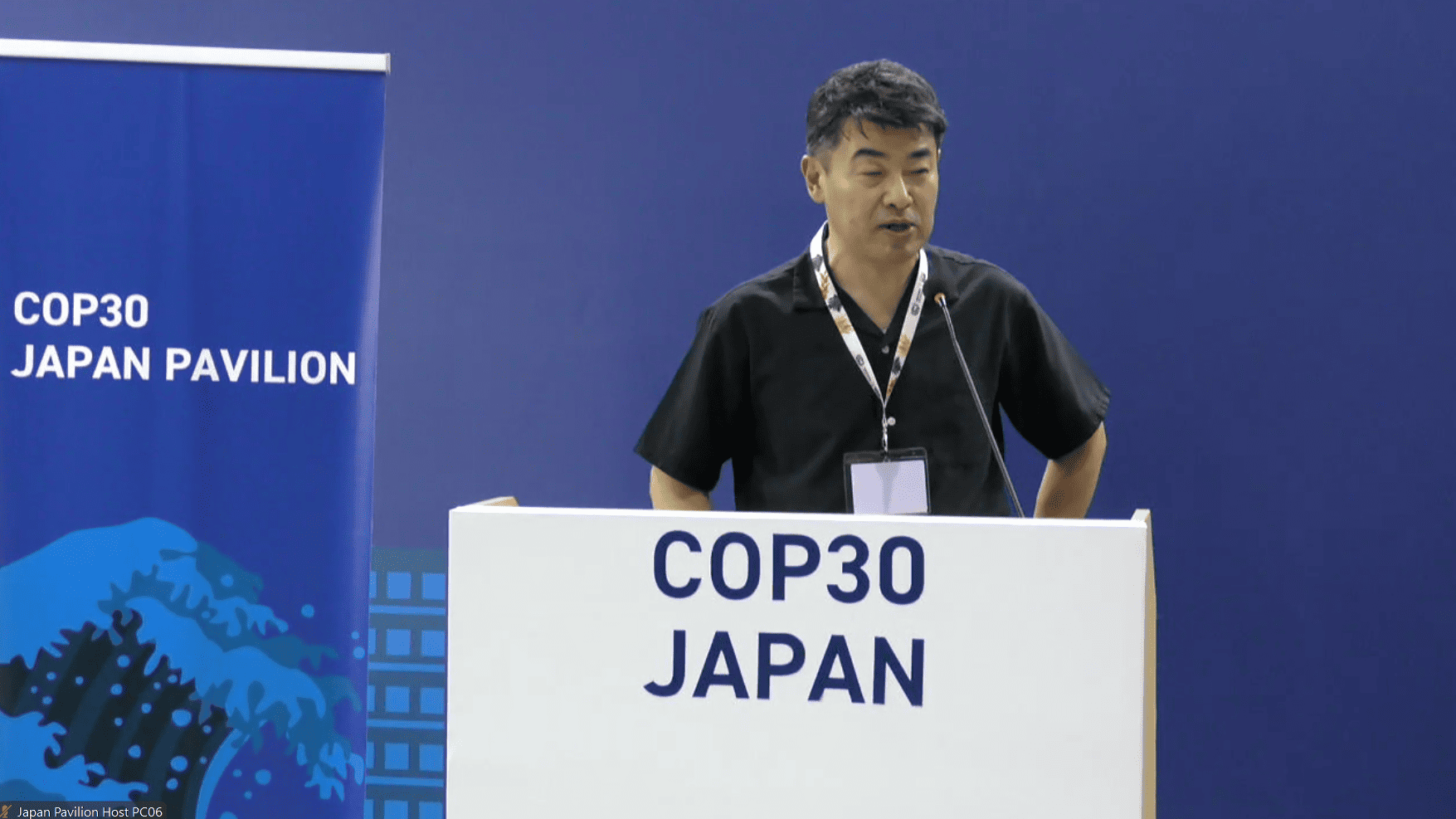
Lecture by Prof. ITSUBO Norihiro
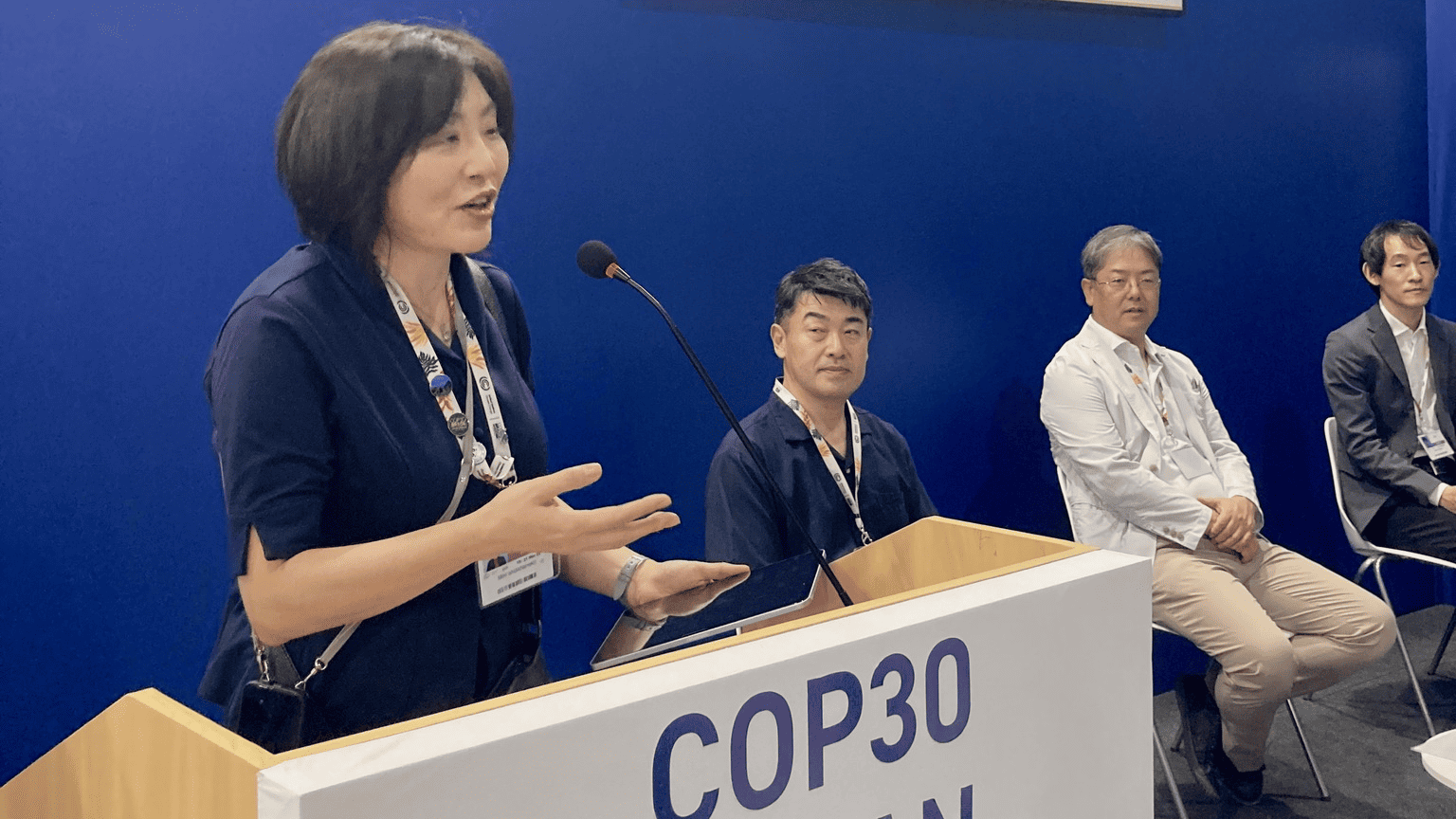
Opening remarks by Ms. NAMEKI Mimi
Lecture by Prof. Olivier Jolliet
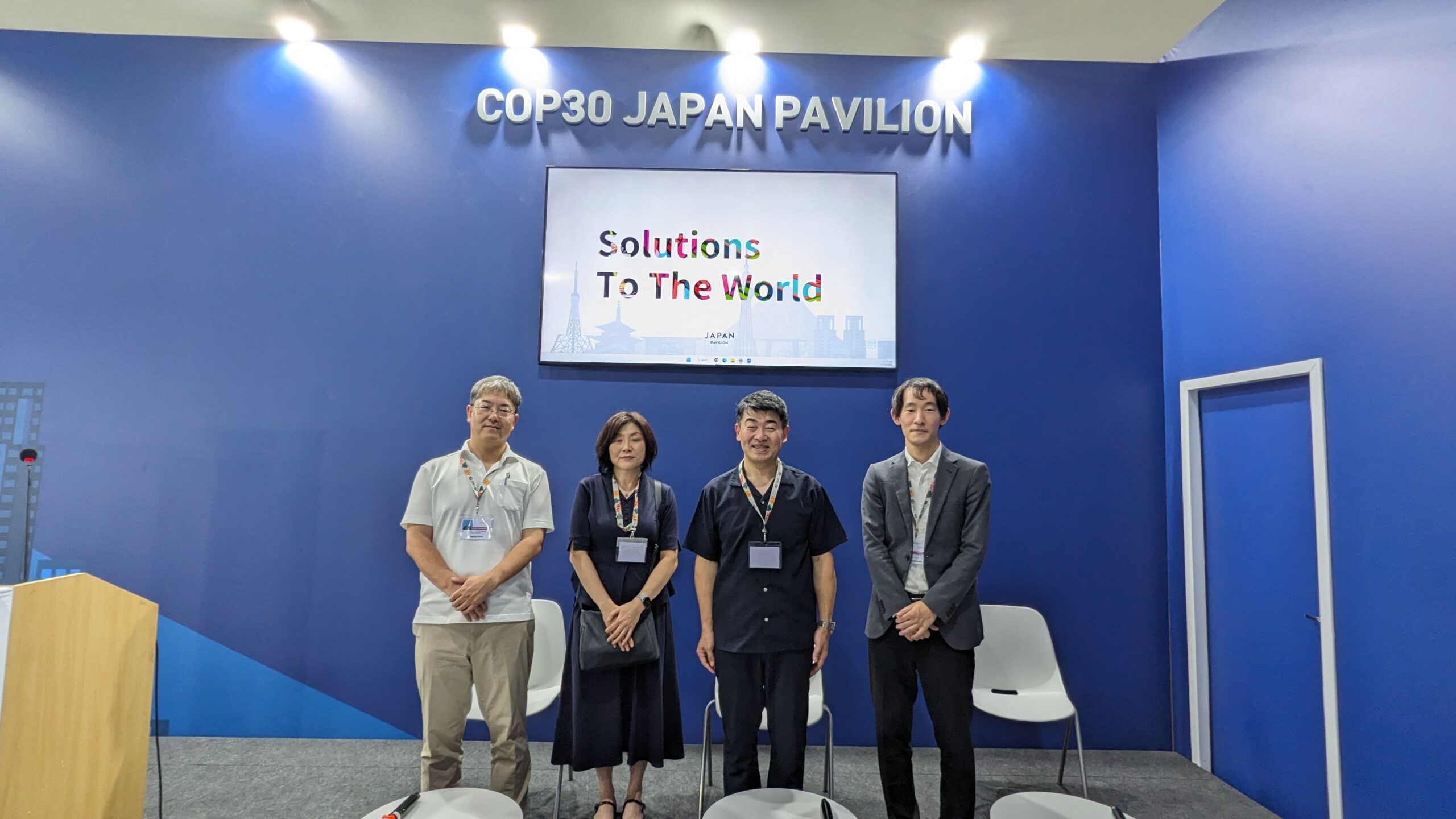
On-site Speakers
