


As GOSAT-GW successfully launched in June 2025, NIES and MOEJ are promoting climate science outreach both domestically and internationally, while also encouraging the utilization of GOSAT-GW data by the private sector.
We integrate the latest scientific knowledge and observational data - including high-spatial-resolution greenhouse gas (GHG) data provided by GOSAT-GW, long-term satellite data from GOSAT and GOSAT-2 dating back to 2009, and precise in-situ measurements collected from ground sites, ships, and aircraft. Our aim is to provide this information not only to researchers but also to domestic and international policymakers, local governments, and the private sector through the Japan GHG Center (provisional name), thereby promoting global decarbonization efforts.
This seminar provides an overview of the current status of GOSAT-GW and the Japan GHG Center, as well as prospects for private-sector's use of the GOSAT data.
Mon 17 Nov. 2025
Brazil time
10:00-11:15
Japan time
22:00-23:15
Promoting Use of GOSAT Data for Climate Science Outreach and Business Applications
Organizer : Ministry of Environment, Japan (MOEJ)・National Institute for Environmental Studies (NIES)
Co-organizer :
Abstract
Program
Opening Remarks
DOI Kentaro|Vice-Minister for Global Environmental Affairs, MOEJ
The GOSAT-GW greenhouse gas observation mission and the planning of the Japan GHG Center
TANIMOTO Hiroshi|Director of Earth System Division, NIES
GHG observations from Space: ESA-Japan cooperation
Frank Martin Seifert|Earth Observation Applications Engineer, Directorate of Earth Observation Programmes, European Space Agency (ESA)
From data to action: How UNEP's International Methane Emissions Observatory will leverage Japan's GOSAT-GW to drive mitigation
Ruth Do Coutto|Deputy Director, Climate Change Division, United Nations Environment Programme (UNEP)
Accelerating LNG Supply Chain Decarbonization and Risk Management: Methane Emission Detection Solutions with Satellite Image Analysis and On-the-Ground Measurements
Momentick – Emission Intelligence
YANO Keisuke|Senior Deputy Manager, Cargo Underwriting Group, Marine & Aviation Department, Sompo Japan Insurance Inc.
Daniel Kashmir|CEO, Momentick Ltd.
Navigating Sustainable Finance: How Satellite Data Guides Our Journey to the Future
GHGSat – CO2
HASHIZUME Takumi|Managing Director, Head of Space Innovation Office, MUFG Bank, Ltd.
Stephane Germain|Founder and Chief Executive Officer, GHGSat Inc.
Framework for Nation-wide Educational Program of Climate Change and Greenhouse Gases in Japan
KONDO Masayuki|Associate professor, Center for Peaceful and Sustainable Futures, the IDEC Institute, Hiroshima University
Introduction: GOSAT series products on NIES websites
SAEKI Tazu|Senior Researcher, Earth System Division, NIES
Closing Remarks
TANIMOTO Hiroshi|Ditto
Moderator
SAEKI Tazu|Ditto
Session Summary
At this seminar, we welcomed speakers from domestic and international research institutions, UN agencies, space organizations, and private companies to present the achievements of Japan’s GOSAT series satellites and prospects for utilizing satellite data to promote decarbonization efforts. In the latest status report on GOSAT-GW, launched in June 2025, we analyzed data obtained through its Focus Mode observation and, for the first time publicly, reported concentrations of carbon dioxide, methane, and nitrogen dioxide. Furthermore, we introduced initiatives for leveraging satellite data to reduce greenhouse gas emissions, including collaboration between Japan and international organizations, and discussed prospects and effectiveness in business fields such as insurance and finance. In addition, we presented the preparation status of an information center (tentatively named the Japan GHG Center) that will disseminate the latest observation data and scientific insights worldwide. Finally, we introduced Japan’s efforts to establish frameworks for next-generation education in climate science and greenhouse gas studies.
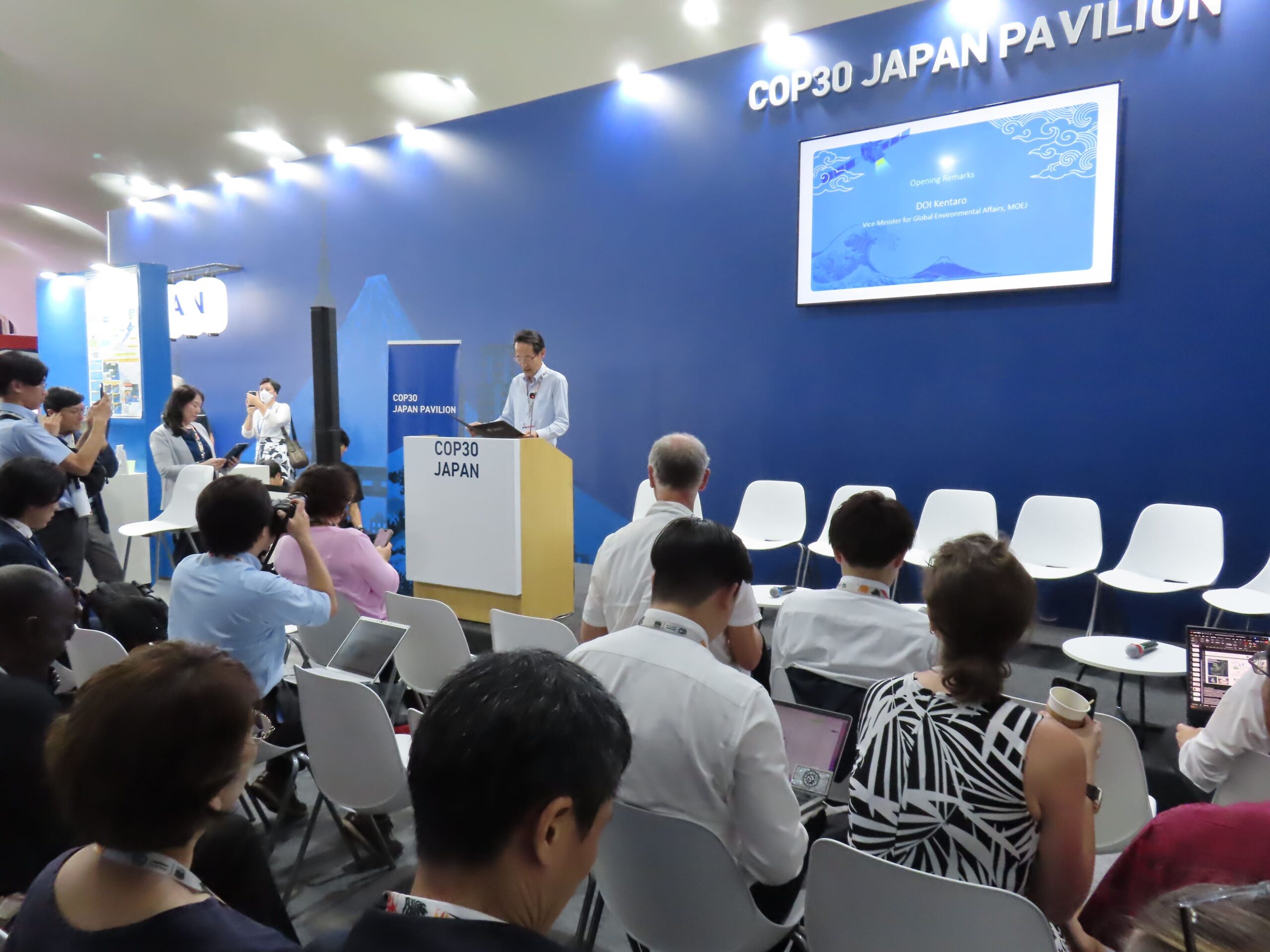
Opening Remarks by Mr. Doi, MOEJ
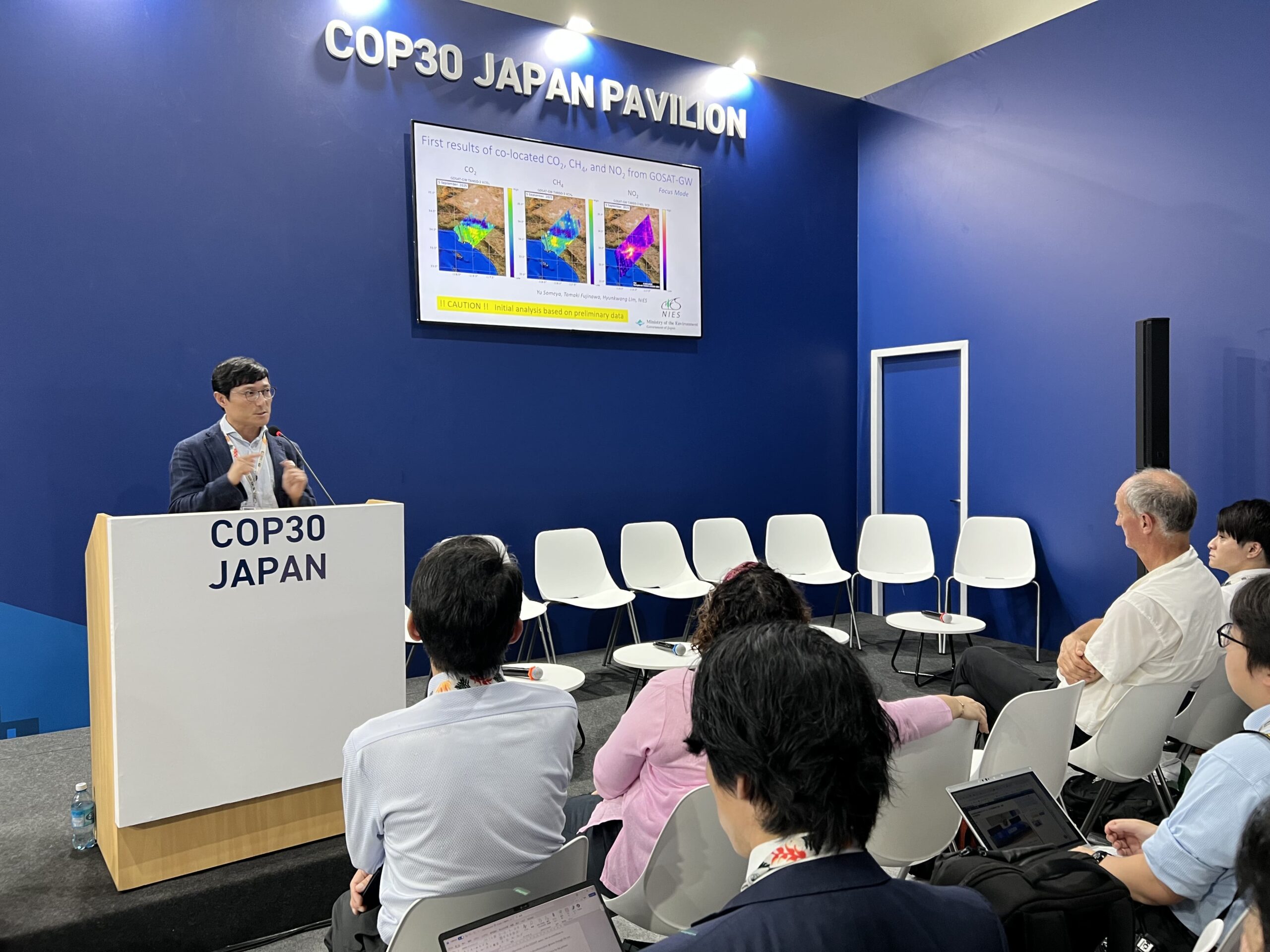
Speech on GOSAT-GW by Dr. Tanimoto, NIES
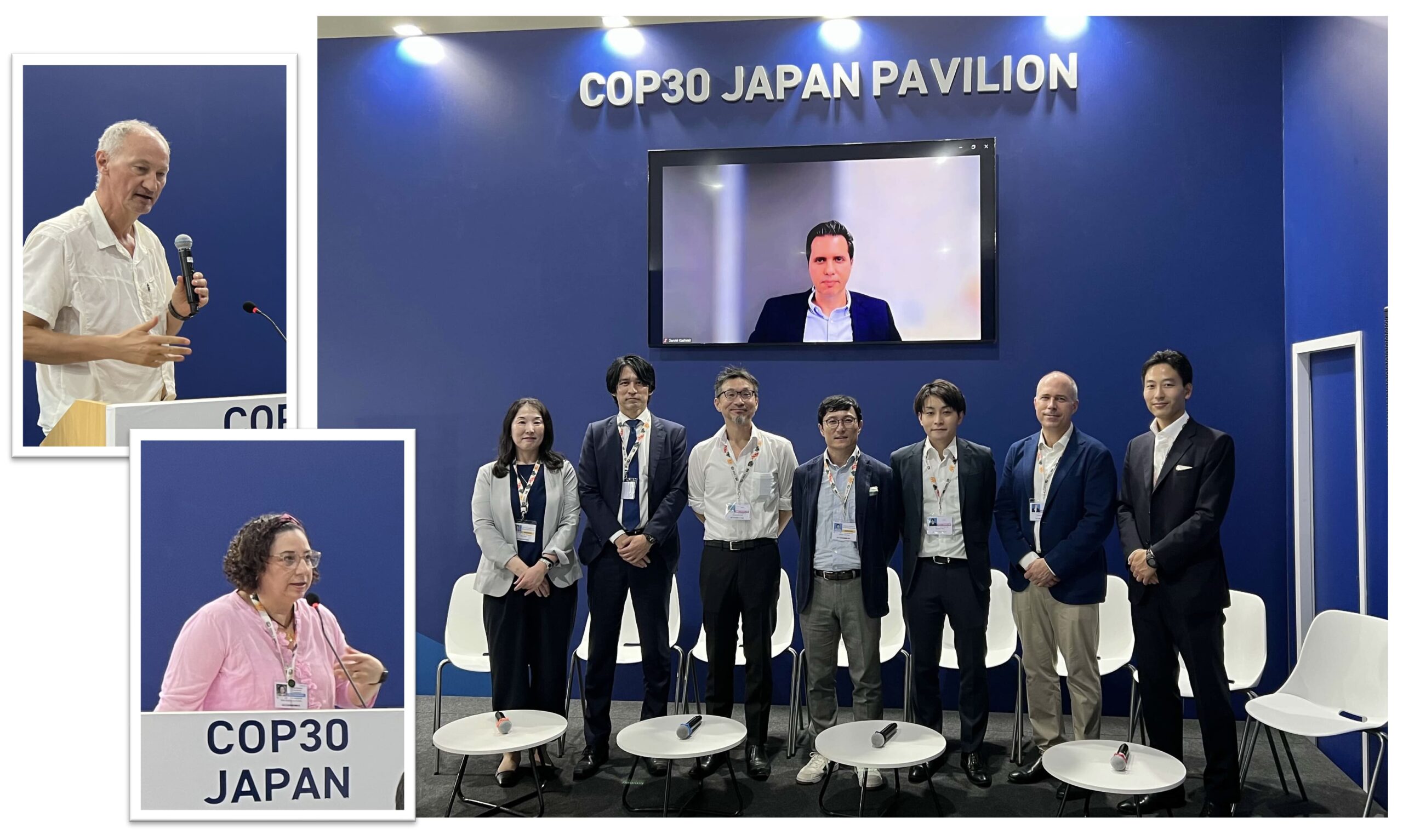
Speakers of the seminar
